Forms
Which forms do you need to fill out? Where can you get them? Here is a list of useful forms for homeschooling in Minnesota.
Useful Forms for Minnesota Homeschoolers
Optional Forms for Homeschoolers
These district forms are optional and include: Student Report for Aids to Nonpublic Students, Graduation Standards Testing Request Form, Secondary Guidance/Counseling services REquest Form, Pupil Health Services Form, Shared Time Policy Form, Eligible Materials for Reimbursement, and Home School Reimbursement Report.
Pupil Immunization Record
The Minnesota Department of Health issues this form to record childhood immunizations.
Letter of Intent to Continue
This is the form homeschoolers can use each year as they continue to homeschool beyond the initial year. This form is in pdf format.
Letter of Intent to Continue to Provide Instruction
Submit a Letter of Intent to Continue to Provide Instruction to the superintendent’s office in the school district where the
parent/legal guardian resides. Complete the information
using this form or a written or electronic format of your choice. Information in the Letter of Intent must be submitted
by October 1 of each year after a Full Report has been filed in the same district. If you have moved, you must file
a new Full Report.
Non-accredited, Nonpublic School Full Report
The person or nonpublic school in charge of providing instruction to a child must submit a Full Report to the superintendent of the school district where the child resides. Information in the Full Report must be submitted by October 1 of the first school year the child receives instruction after reaching the age of seven; with 15 days of when a parent withdraws a child from public school after age seven to provide instruction in a nonpublic school that is not accredited by a state-recognized accrediting agency; within 15 days of moving out of a district; and by October 1 after a new resident district is established.Submit the Letter of Intent to Continue to Provide Instruction by October 1 in subsequent years.
Letter of Intent to Continue Homeschooling
This is a suggested form from the Minnesota Department of Education to submit the Letter of Intent to Continue Homeschooling. Information must be submitted by October 1 of each year after a Full Report has been filed in the same district.
Annual Report to School District
In the summer of 2011, the Minnesota Legislature passed the Homeschool Mandate Reduction bill, improving homeschool reporting and strengthening homeschooling rights in Minnesota. Minnesota law does not specify how home educators should write their annual report, only that it is due by October 1 each year and certain information must be communicated. MÂCHÉ encourages you to use one of these forms or to write your own letter instead of any documents a local school district may send because those usually are, to some degree, in error. Do not set precedent by reporting more information than the statute specifies. Provided by Minnesota Association of Christian Home Educators (MACHE).
Initial Report To Superintendent
This pdf form is the form homeschoolers fill out when they first begin homeschooling AND when their child reaches age 7. (Note: If your child is under age 7 but was previously enrolled in public school, you may need to file this form upon removing them from school.
Homeschool Full Report
This is a suggested form from the Minnesota Department of Education to submit a Full Report to the superintendent's office in the school district where the parents/legal guardians reside.
Reporting Information for Homeschoolers in the State of Minnesota
Minnesota law requires homeschooling families to report certain information to their school district once a year. The specific statute that addresses reporting, Minn. Stat. 120A.24, subd. 1, is fairly easy to read and understand.
Student Report for Aids to Nonpublic Students
This form must be completed at the nonpublic school level and filed with the public school district offices by October 1.
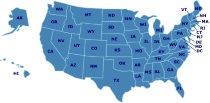
Looking for Another State?
Featured Resources
As an Amazon Associate, we earn from qualifying purchases. We get commissions for purchases made through links on this site.

The Organizing Sourcebook : Nine Strategies for Simplifying Your Life
The nine habits of highly organized people Organizing consultant Kathy Waddill demonstrates how the simple act of being organized can improve your quality of life. In The Organizing Sourcebook, she presents nine organizing principles that can easily be applied to any situation, activity, or environment. The book gives you the tools for managing time; decreasing stress; and dealing with cultural, personal, and emotional change. Case histories illustrate how each strategy solved a specific proble...

Upside-Down Brilliance: The Visual Spatial Learner
Dr. Linda Silverman coined the term "visual-spatial learner" to describe the special and unique gifts of people who learn best through seeing and with images. This guide is a great resource as you support your homeschooling visual learner in discovering the best ways to learn and succeed.
Alpha-Phonics
Alpha Phonics is a primer for beginning readers. It features 128 self-explanatory lessons, printed in large, clear calligraphy suitable for beginning readers. You'll find product information about Alpha-Phonics here.

Discovery of the Child
Maria Montessori went beyond the conventions of the day to seek a new way of knowing and loving a child. In THE DISCOVERY OF THE CHILD, she describes the nature of the child and her method of working more fully with the child's urge to learn. With 16 pages of photographs.

Help for the Harried Homeschooler : A Practical Guide to Balancing Your Child's Education with the Rest of Your Life
Homeschooling moms and dads can be overwhelmed by the demands on their time. Between their children’s educational needs; their roles as spouse, parent, and more; and their own individual desires and goals, these mothers and fathers struggle to accomplish all that must be done. In Help for the Harried Homeschooler, experienced homeschooler, author, and mother of four Christine Field offers sound advice for parents who want not only to achieve homeschooling success but also to reach a balanc...